CATL’s CIIC Gives a Boost to the Launch of Neta S Shooting Brake: World’s First Skateboard Chassis Will be Put into Mass Production
On August 25, 2024, Hozon Auto held a press conference for new car launch, which unveiled the CIIC 800V model of Neta S Shooting Brake equipped with CATL’s CIIC. Zhang Yong, CEO of Hozon Auto, revealed that this model will be put into mass production in the fourth quarter of this year.
As the world’s first passenger car model based on the mass production of skateboard chassis, the CIIC 800V model of Neta S Shooting Brake is a gorgeous and high-performance model that truly ushers in mass production of skateboard chassis.
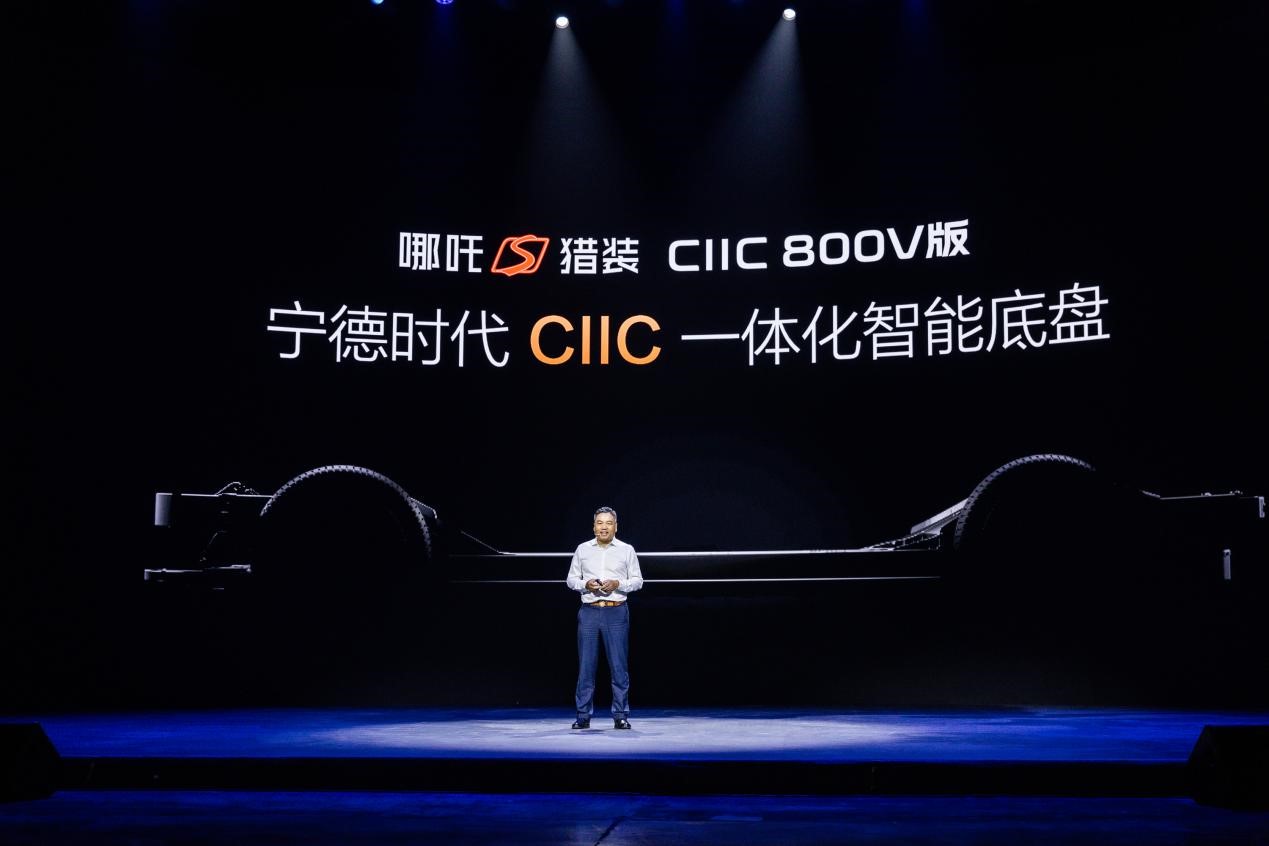
(Yang Hanbing, Managing Director of CATL (Shanghai) Intelligent Technology)
At the press conference, Yang Hanbing, Managing Director of CATL (Shanghai) Intelligent Technology, shared the customized CIIC solution provided by CATL (Shanghai) Intelligent Technology for Hozon Auto based on the latter’s user needs. He said that this solution has provided help for the CIIC 800V model of Neta S Shooting Brake in four major aspects including safety, performance of the full-stack 800V platform, fast charging and power saving, and brought an ultimate user experience to consumers.
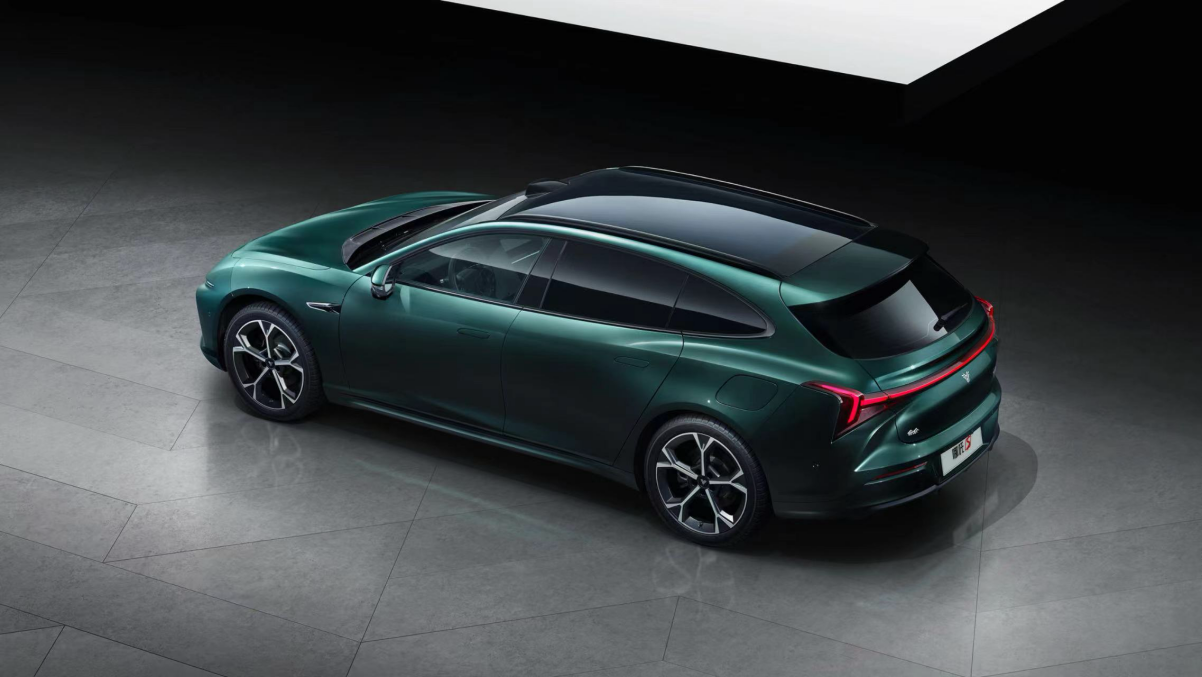
(Neta S Shooting Brake)
Battery and Chassis Safety is Ensured
CIIC equipped in this model adopts the Cell to Chassis design that integrates the battery cell into the chassis for the sharing of the same structure between the cell and the chassis and better rigidity. Moreover, the battery cell is designed to be inverted so as to put the explosion-proof valve downward. This enables the movement of highly compressed and heated airflow downward along a specified pressure relief path under extreme conditions for more secure “decompression and deflation” and a lower risk of thermal damage to the passenger compartment. Besides that, based on CATL’s NP2.0 (without heat diffusion), it can avoid open flame outside the battery pack when the battery cell is out of thermal control under extreme conditions, and thus improve vehicle safety.
Based on such inversion arrangement, the distance from the energy bin to the ground is increased for vehicles with the same height. The combination of this improvement and innovative structural design guarantees a considerably lower probability of scratches in the battery cell when the bottom is scratched on bumpy or stone roads.
Based on the decoupling of the upper body and chassis, CIIC can absorb more than 85% of collision energy (whereas traditional chassis can only absorb around 55%-60%). In the event of a collision, the upper body will suffer less impact, indicating stronger safety protection for passengers.
A Consistently Running 800V Full-stack Platform Is Equipped
CIIC is equipped with a versatile range of toolkits, which can cater to different models with customized solutions. The integrated design allows it to achieve high-level integration in hardware well as in platform architecture and performance. Moreover, the drive, high-voltage power distribution, and thermal management systems are integrated to cater to requirements for charging and discharging, and guarantee the consistent running of the full-stack platform.
The 800V SiC electric drive system has a CLTC efficiency of 92%, and a continuous power of more than 110kW (with the industry average being merely 60kw-90kw), over 30% higher than the industry average. The ratio of continuous/peak power is as high as 0.55, indicating more robust and stable power output.
The difference between continuous and peak power is that peak power can only happen for around 10s. If it happens for more than 10s, the temperature of the electric drive will exceed the safety limit to force a decline of power. Continuous power means the amount of power that a battery can supply for safe running over a long period of time. It can cater to vehicles with heavy loads or those that requires long-distance climbing.
5-minute Charging Allows a Continuous Travel of 210km, and Fast Charging Is Not Specific to a Particular Charging Pile
Charging speed is another consideration of consumers when buying electric vehicles. The CIIC 800V model of Neta S Shooting Brake is installed with CATL Shenxing Super Charging Battery, which has a maximum charge rate of 5C. 5-minute charging allows a continuous travel of 210km, and 30%-80% SOC requires 9.6 minutes of charging. Charging is fast in such a way that it takes the time of a cup of coffee to replenish energy.
In addition to that, CIIC allows for downward compatibility with charging piles through an electrically driven boost system. This helps achieve fast charging at 800V on DC charging piles whose input voltage is not 800V.
As is known to all, batteries are liable to heat up during fast charging. For the purpose of energy replenishment at a suitable temperature for the battery, CIIC is designed with double-sided cooling to increase the cooling capacity by 200% and the heat exchange area by 400%. It can quickly replenish energy as well as elongate the service life of the battery cell. Under extreme conditions, the battery cell can also be rapidly cooled down.
The Integration of Battery, Motor and Electronic Control Systems Enables the Connection of Cooling and Heating Systems for Better Safety and Cost Reduction
The integrated design of each CIIC’s subsystem not only achieves high-level mechanical integration, but more importantly, the integration of battery, electric drive, and thermal management systems. Such design enables the connection of cooling and heating systems. Its CLTC power consumption is as low as 11.7kW/h per 100km, indicating that users can travel more miles.
Based on the thermal management system of the multi-source heat pump, CIIC can achieve more efficient energy management and heat source management. The attenuation rate of heat preservation is less than 33% at -7℃. For the purpose of complying with the thermal management requirements under all types of climates, we have formulated more than 20 operating strategies, which can achieve integrated energy management in four modes: cooling in summer, heating in winter, heat pump in bitter weather, and waste heat recovery.
In case of fast charging during winter, the battery can be preheated to a proper temperature at the appropriate time, ensuring fast charging and the increase of battery life.
In addition to that, the low-voltage power supply and distribution system of CIIC replaces the lead-acid battery with the PDC+12V lithium battery. It can last with the vehicle for the first period of its lifespan without replacement (lead-acid batteries have to be replaced every 2-3 years). It is designed for use with the PDC low-voltage intelligent power supply and distribution controller, which can intelligently inspect the safety of the vehicle’s electric power supply network throughout the life cycle and achieve health management.
CIIC Ushers in the Era of Mass Production for Skateboard Chassis


(CIIC)
Skateboard chassis is a novel auto design concept first proposed in 2002. Its core values includes the decoupling and parallel development of the upper body and chassis. It has streamlined the development cycle and transformed the traditional model for vehicle development and business. With an increasing role in vehicle movement and energy management, the chassis can absorb a larger part of energy from the vehicle’s head-on collision and reduce styling limits, thereby allowing the focus of vehicle manufacturing to shift more to product definition, as well as the development of functions related to user experience, including intelligent driving, intelligent cockpit, and auto styling.
CIIC, CATL’s skateboard chassis, has the following core characteristics: decoupling of the upper body and lower chassis, high-level integration, and open access. It is also equipped with a versatile set of toolkits . For example, the CIIC 800V model of Neta S Shooting Brake unveiled at this conference is equipped with a full-stack 800V platform.
As a mobile energy unit with self-driving capabilities, CIIC assumes the roles of a sports center, an energy center, and a data center. Through scalable architecture and standardized interface design, it can cater to an extended variety of models.
100 years ago, a production line turned vehicles from luxury to consumer goods. Today, the decoupling of the skateboard chassis and the upper body has opened up the “one-for-all” possibility, which has a far-reaching influence on the transformation of the auto industry in the next century.