Born from Safety, Empowered by Intelligence | Key Takeaways from the 2025 Intelligent Electrified Chassis Systems Conference
Cai Jianyong, CTO of CAIT
The leading progress in electrification and intelligence in the Chinese market, the diverse vehicle-use scenarios starting from user needs, as well as the increasingly mature and developing high-level intelligent driving assistance systems and the grand vision of ultimate unmanned driving, have given rise to higher requirements for chassis safety, control, stability, comfort, and spatial flexibility, and have promoted the transformation of the chassis from mechanical load-bearing to intelligent space-enabling.
Safety is our core gene. The Bedrock Chassis establishes comprehensive safety across physical, functional, redundant, and informational domains through an integrated system of active warning and passive defense.
For human-machine co-driving, chassis are evolving toward “drive-by-wire + autonomous cognition and prediction + VMC centralized control”; for autonomous driving, chassis require full redundancy to meet safety standards and maximize vehicle space.
The Way of the CATL Bedrock Chassis: High integration forges a rock-solid foundation of supreme safety and efficiency, while deep decoupling pioneers an open-architecture ecosystem for shared success.
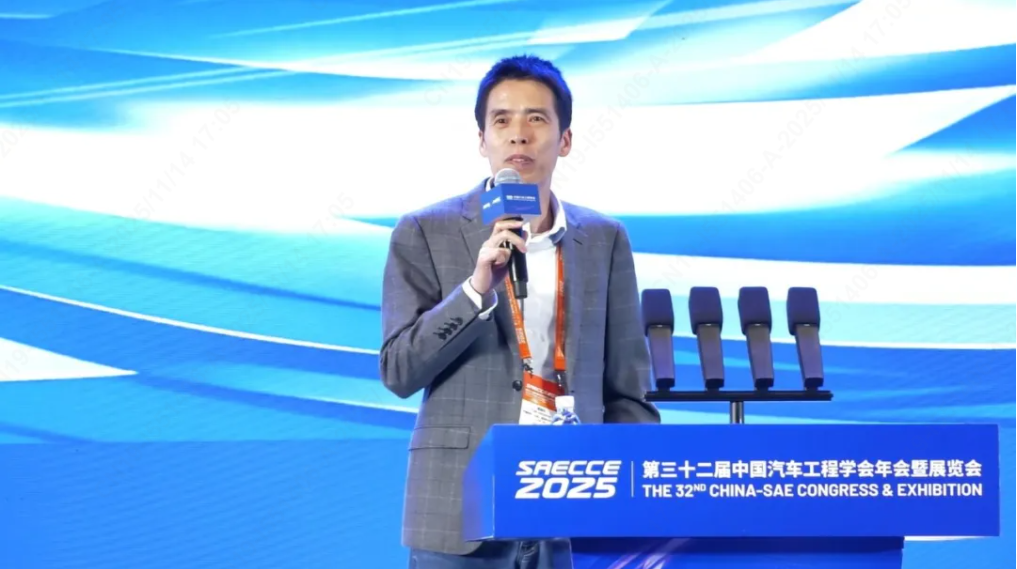
Sean, Director of Vehicle Integration and Validation Department of CAIT
Innovative solutions for skateboard chassis integration validation: Decoupled architecture + digital-intelligent validation + automated toolchain + AI simulation platform, making “the chassis is vehicle-ready upon production” the new standard.
To meet multi-controller validation for chassis, extreme validation cycles, high delivery quality requirements, and iterative continuous testing needs, integrated testing is a necessary validation method.
The uniquely developed CATL Bedrock Chassis charging system testing equipment can complete charging function, performance, regulatory certification, and compatibility testing within one week.
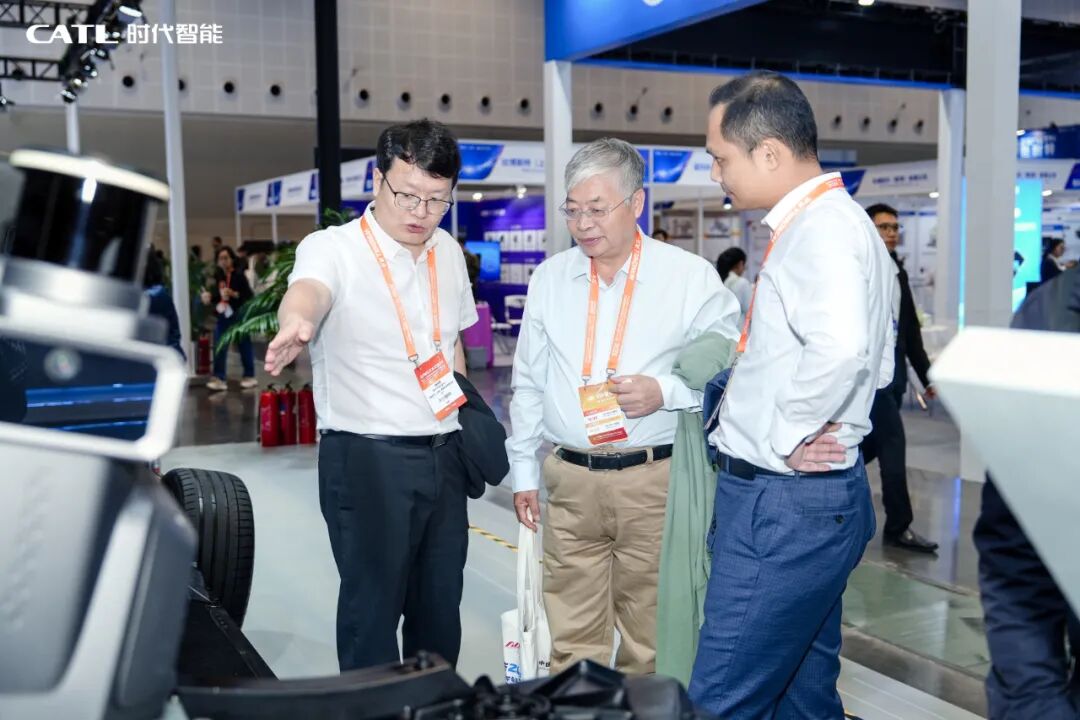
Safety Is the Bottom Line:Reconstruction from Mobile Space to Safety Boundary
Driven by new consumer trends and advancements in electric and intelligent technologies, vehicles are evolving from mere transportation tools to “third living spaces” capable of accommodating scenarios such as office work, family time, and leisure. "This transformation places unprecedented demands on the underlying architecture of vehicles. Traditional chassis, predominantly mechanical components designed only for basic power transmission and handling, struggle to meet the smart era's demands for safety, precise control, rapid response, high integration, and continuous iteration. Safety is the bottom line and also the core issue that needs to be addressed for the chassis in the intelligent era." said Cai Jianyong. From the electrification transformation to the current era of intelligent human-machine co-driving and the envisioned future of autonomous driving, chassis must continuously evolve. With safety as its core gene, it must grow into a highly integrated, modular, intelligent, and adaptable mobility platform, achieving physical safety, functional safety, redundancy design, and information security.
Facing more complex usage scenarios and higher requirements for physical safety, functional safety, redundancy design, and information security, CATL Bedrock Chassis integrates battery safety, structural safety, and system safety to build a comprehensive chassis safety system with active warning and passive defense.
At the cell safety level, fully addressing technical pain points like intrinsic material safety and fast-charging safety, combined with no-thermal-runaway technology, we upgrade cells from “passive fire resistance” to an active prevention system integrating “chemistry, structure, algorithm, and cloud” in a four-in-one approach.
At the structural safety level, we combine material and structural innovations. First, the battery structure and chassis structure are deeply coupled, sharing load paths to more efficiently absorb and disperse collision forces during impacts; the thermal runaway pressure relief channel is integrated with the vehicle body's collision energy absorption zone, enhancing collision safety. Second, aerospace-grade aluminum and submarine-grade steel can be used to increase chassis support strength, forming a comprehensive safety defense system for all scenarios and speed ranges.
At the system safety level, through a comprehensive safety OS and vehicle-cloud integration, the chassis becomes an “evolvable safety platform”. Through a full-stack redundancy design covering high voltage and low voltage, communication, and control, fault-tolerant operation and risk degradation of key systems are achieved. For example, in autonomous driving scenarios, if a system-level single-point failure occurs, the vehicle can ensure basic mission continuity, complete the current road section, and proceed to a maintenance station.
“The mobile nature of vehicles dictates that safety is the bottom line for both vehicles and chassis.” Cai Jianyong emphasized. “Without safety, there is no electrification or intelligence, let alone future spatial diversity.”
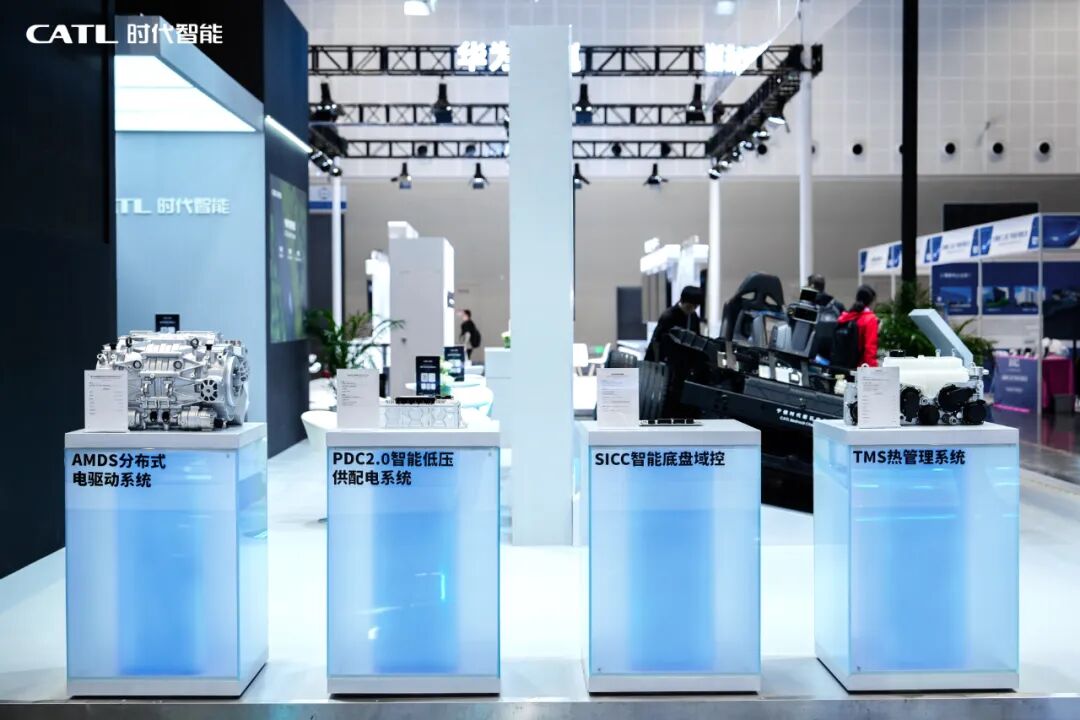
Intelligence Is the Direction: Making the Chassis an Agent “with a Cerebellum”
In human-machine co-driving scenarios, chassis are evolving toward “drive-by-wire + autonomous cognition and prediction + VMC centralized control”. Cai Jianyong proposed: The future chassis is not only a mechanical load-bearing structure but should also become a “cognitive and decision-making cerebellum”, enabling collaborative evolution with intelligent driving systems. From singular to collaborative mode, from command execution to intelligent decision-making, drive-by-wire technology is the foundation, cognition and decision-making are the safeguards, and VMC is the core for achieving intelligent collaborative control.
In autonomous driving scenarios, chassis design requires full redundancy to meet safety requirements and maximize vehicle space, such as hardware redundancy and software fault tolerance. Through integrated design, redundant components are cleverly arranged within the chassis structure, ensuring safety without adding volume or weight burdens from redundancy.
CATL Bedrock Chassis, through its “upper-lower decoupling, high integration, and open architecture” design, enables decoupled collaboration of hardware, software, communication, and energy supply systems, maintaining standardization while supporting differentiated innovation. This design logic allows the chassis to be independently developed, rapidly validated, and flexibly matched with different vehicle models and application scenarios, providing platform-level support for robotaxi, personalized vehicle manufacturing, and the intelligent transformation of automakers.
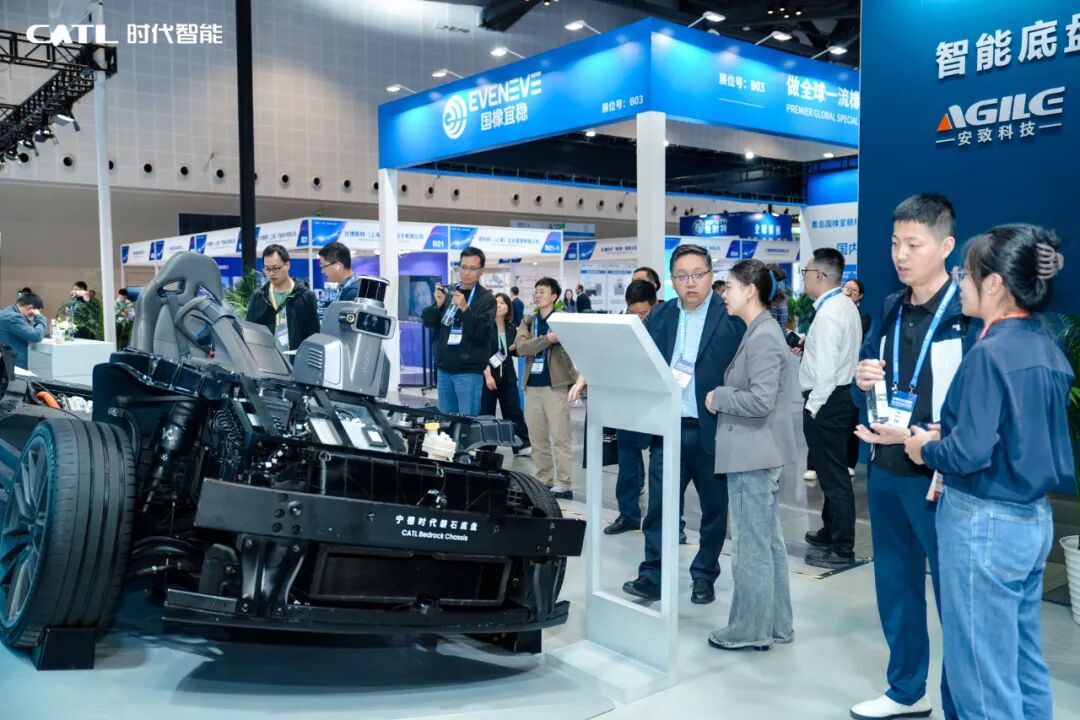
Systematic Implementation: Upper-Lower Decoupling + Digital-Intelligent Validation to Solve “Parallel Development” Challenges
Shi Shanghui shared the practical path of how the CATL Bedrock Chassis moved from testing and validation to mass production from the perspective of the testing and validation system. The “parallel development” model of upper and lower body brought by skateboard chassis breaks the traditional vertical vehicle manufacturing model, requiring the chassis to achieve complete functional and safety validation before vehicle assembly. To this end, CAIT has created an innovative systematic validation system for skateboard chassis through decoupled architecture, digital-intelligent validation, automated toolchains, and AI simulation platforms, ensuring that “the chassis is vehicle-ready upon production”.
This system includes:
1、A self-developed ALM/RADAR system: It achieves full-link bidirectional traceability of requirements, development, validation, and issues;
2、Innovative skateboard chassis integrated testing solutions and strategies: ICT and automotive testing technology are integrated in a cross-industry manner. Controllers of the upper body are simulated using software models and interact with the skateboard chassis through standardized interfaces, enabling independent testing without physical upper body components;
3、Chassis-level integrated validation using HIL + VIL + Labcar: This ensures interaction confirmation between upper and lower body before manufacturing, efficiently validates multi-system collaboration functionality, interactivity, and safety in advance, accelerating vehicle development cycles and reducing risks, ensuring the CATL Bedrock Chassis is ready for use upon their rolling off the production line;
4、Automated testing toolchain: A full-process automated testing system has been established, which reduces the testing cycles to within one month.
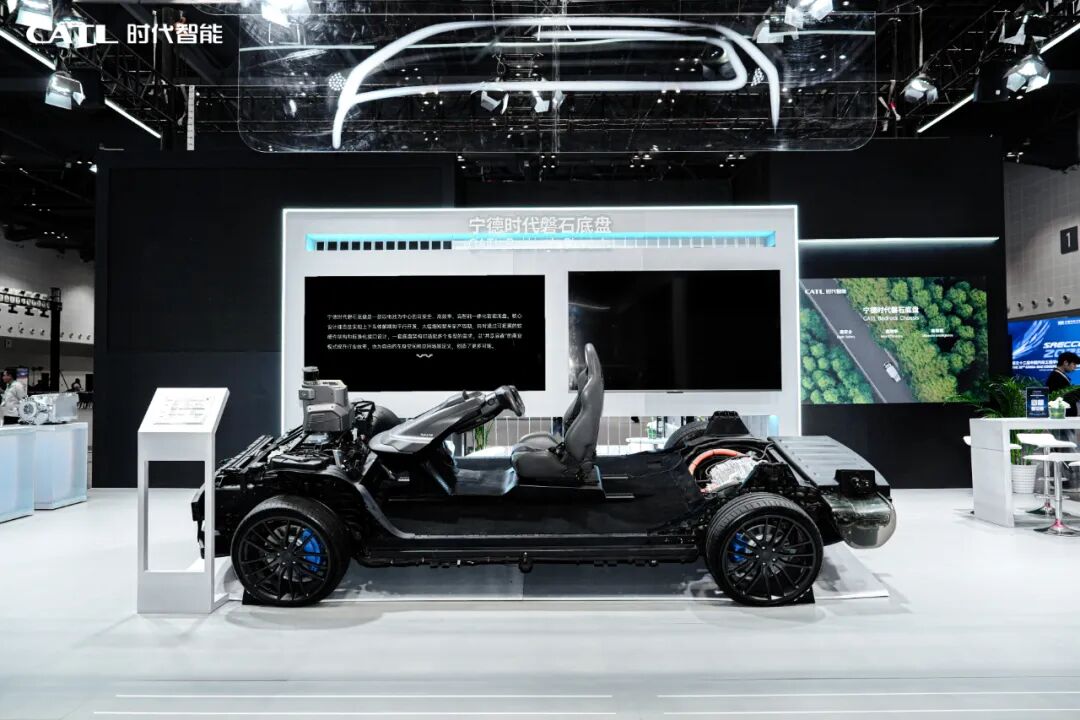
In addition, the independently developed charging system test equipment for the Bedrock Chassis realizes pre-testing and low-cost high efficiency in aspects ranging from the hardware plan to the software plan and the test plan, meeting national and international charging standards.
As the automotive industry moves toward intelligence, the chassis is evolving from a traditional mechanical component into an “intelligent motion and energy management hub” that determines vehicle safety, intelligence, and efficiency. The proliferation of intelligent driving, the rise of scenario-based vehicle manufacturing like robotaxi, and increasingly stringent national safety standards collectively impose rigorous demands on chassis for high safety, high intelligence, and high redundancy. As a skateboard chassis technology provider, CAITwill adhere to high safety, high intelligence, and high efficiency as the core of technological R&D, build an open industrial ecosystem with partners, continuously explore new boundaries of mobility, and ensure that every evolution of the intelligent chassis makes travel safer and freer.